
Riding to Independence
Sukumari Bindhani's Journey from Dependence to Empowerment
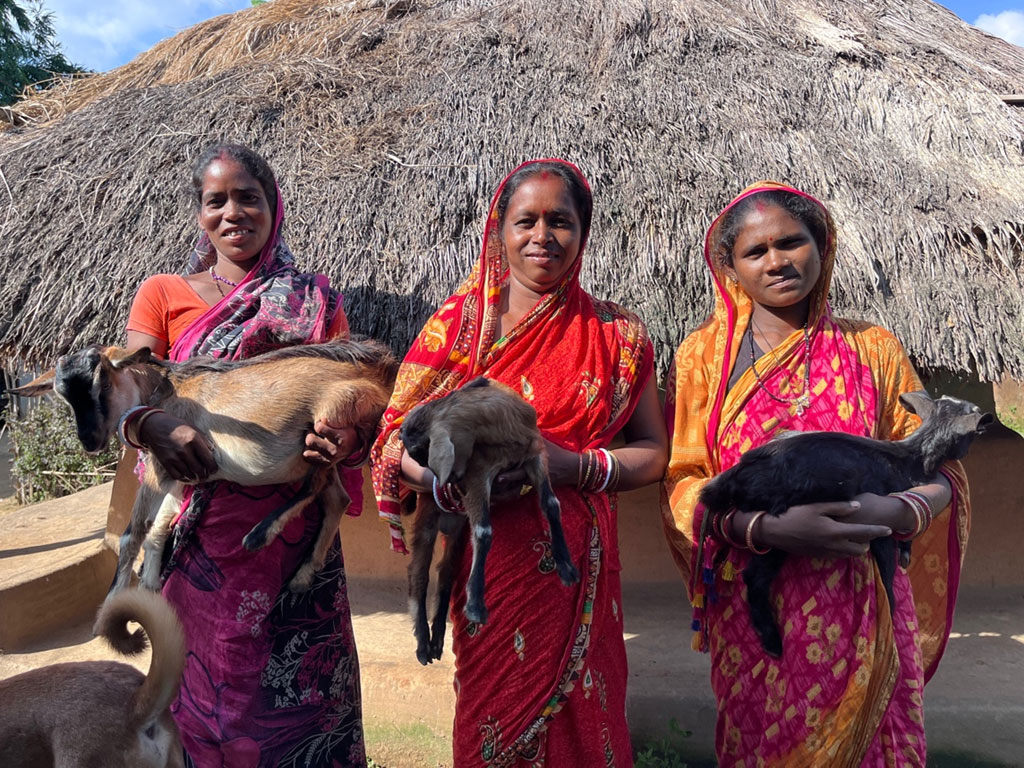
Sukumari Bindhani, a resident of Joka village in Budhikhamari GP, embarked on a journey of transformation three years ago. Through Nydhee’s intervention, she started with two goats and gradually grew her herd to 12 goats. However, despite her increasing success with goat rearing, one aspect of her life remained unchanged—her dependence on men to sell the goats in the market. Determined to change this, Sukumari made a bold decision to learn how to ride a TVS Excel Heavy Duty, enabling her to take control of her business and become truly independent.
The Beginning: Starting with Two Goats
Before Nydhee’s intervention, Sukumari had little experience with livestock. The training provided through the project helped her understand best practices in goat rearing, including feeding, health management, and the importance of vaccination. With financial support, she purchased two goats, marking the start of her entrepreneurial journey.
Over time, her diligence and commitment paid off, and her herd expanded to 12 goats. The additional income from selling goats contributed significantly to her household’s financial stability, giving her family the means to improve their living conditions.
However, while the goat rearing itself was progressing, Sukumari noticed a persistent barrier—her dependence on men for taking the goats to market. The nearest market was a significant distance away, and each time there was a need to sell goats, she had to rely on her husband or other male family members to transport the livestock.
Breaking the Barrier: Learning to Ride
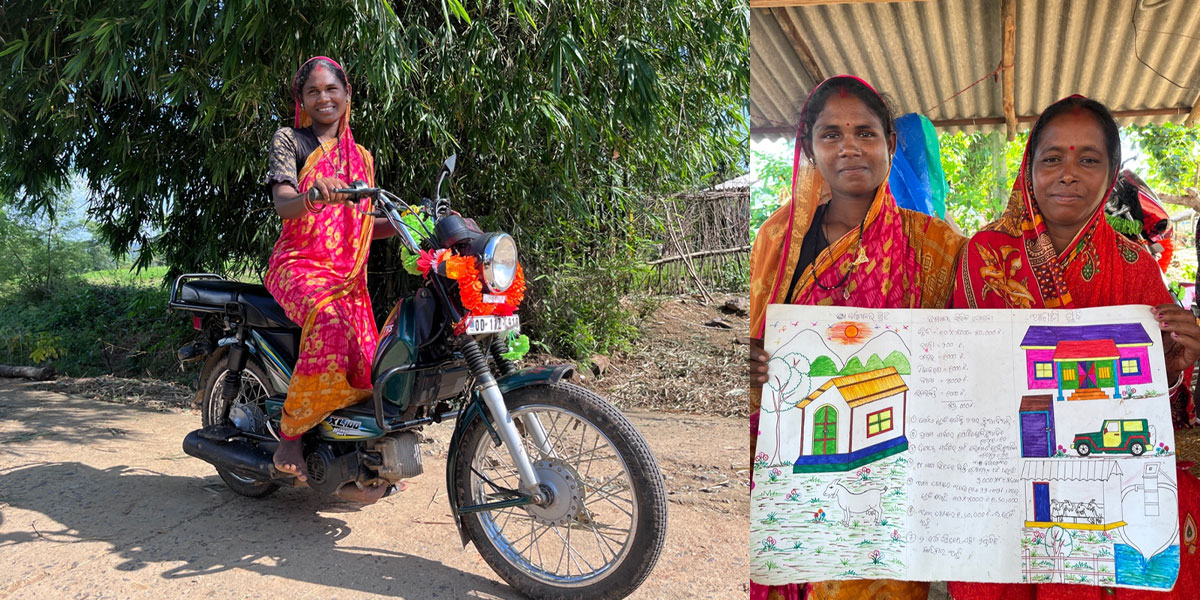
Sukumari realized that in order to truly empower herself, she needed to eliminate this dependence. That’s when she made the courageous decision to learn how to ride a TVS Excel Heavy Duty—a two-wheeler commonly used for transporting goods in rural areas.
The process wasn’t easy. Learning to ride the heavy-duty vehicle was a challenge, but Sukumari was determined. She practiced diligently, often facing scepticism and even ridicule from some in her community. However, her vision for independence kept her motivated. With each practice ride, her confidence grew, and soon, she was proficient enough to ride to the market on her own.
Taking Control: Selling in the Market
Once Sukumari mastered riding the TVS, she no longer had to wait for her husband or other male family members to take the goats to the market. She began riding her two-wheeler herself, carrying her goats to the nearest market and negotiating sales directly with buyers.
This newfound independence not only gave her control over her business but also increased her confidence and visibility in the community. People began to recognize her as a woman who broke the mold—someone who took her destiny into her own hands.
Through her own efforts, Sukumari sold her goats directly in the market, ensuring better profits by cutting out middlemen. She was no longer just a passive participant in the household’s income generation; she had become a leader and decision-maker.
Empowering Other Women
Sukumari’s story quickly spread through her village and neighboring areas, inspiring other women to reconsider their own limitations. She began encouraging other women involved in goat rearing to become more independent and take control of their livelihoods. Her determination showed that, with the right mindset, traditional gender roles could be challenged and overcome.
Sukumari Bindhani’s journey from being a dependent goat rearer to a self-sufficient entrepreneur is an inspiring tale of empowerment. By learning to ride a TVS Excel Heavy Duty, she broke through the traditional barriers that confined her to reliance on men for market access. Today, she not only sustains her family through goat rearing but also stands as a symbol of independence and courage in her community.
Sukumari’s story demonstrates that true empowerment comes not just from financial independence but from the courage to challenge societal norms and redefine what is possible.