
Integrated Animal Management
A Pathway to Sustainable Livelihoods for Rural Communities
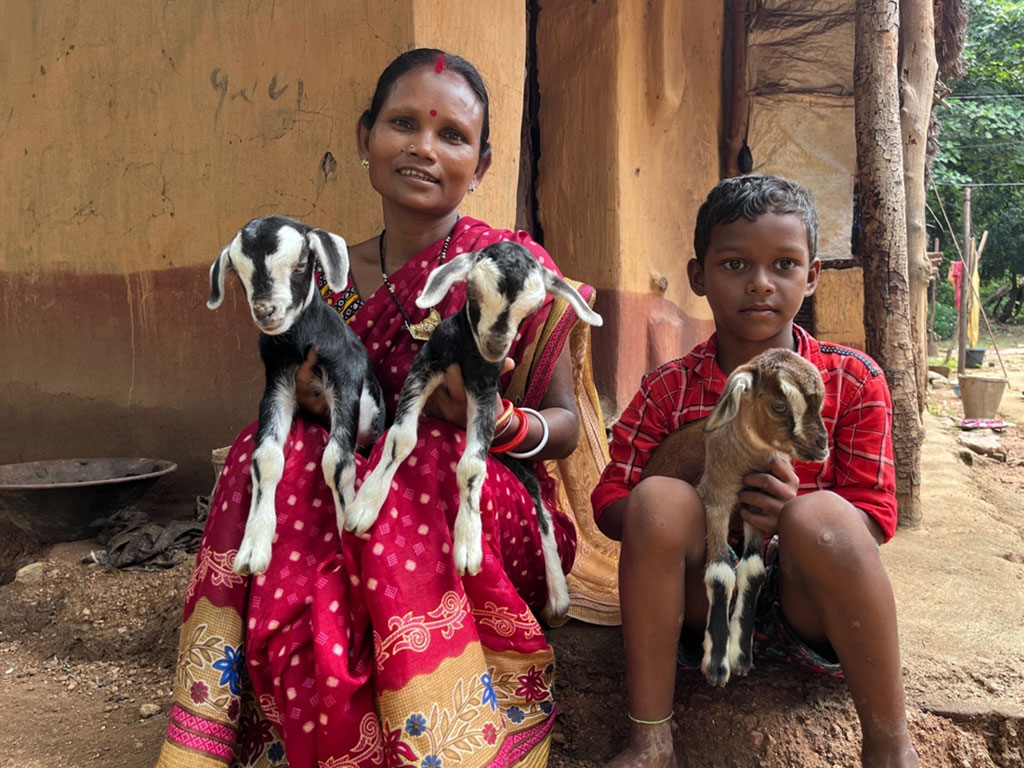
Integrated Animal Management (IAM) has become a powerful tool in transforming the livelihoods of rural communities by providing a holistic approach to livestock rearing. In regions like Badagaon and surrounding villages, organizations like Nydhee have introduced IAM practices that have significantly improved the health of livestock, increased incomes, and empowered women to take control of their livelihoods. Through comprehensive training in animal health, feeding practices, and financial planning, rural families have seen sustainable growth in their income and a dramatic reduction in livestock mortality.
Impact of Integrated Animal Management
Prior to the introduction of IAM, goat rearing and livestock management were fraught with challenges. High mortality rates, lack of proper nutrition, and inadequate veterinary care often led to significant losses for families reliant on goats for income. Through Nydhee’s IAM training programs, women like Jambi Naik and Janaki Singh have transformed their small goat-rearing ventures into sustainable income-generating activities.
For Jambi Naik, the introduction of a household income and expenditure tracker provided her with a clearer picture of her financial situation. By meticulously tracking her earnings from goat sales and farm activities, she was able to plan more effectively and improve her financial stability. Moreover, with the help of Nydhee staff, she maintained a vaccination booklet, ensuring that her goats received timely vaccines, which drastically reduced mortality.
Similarly, Janaki Singh’s experience illustrates the broader impact of IAM practices. Having struggled with high goat mortality prior to the intervention, she now follows IAM protocols, including vaccination, mineral cake feeding, and azolla supplementation. These practices not only improved the health of her goats but also increased their market value. The additional income allowed her to invest in farm activities like borewell installation and vegetable cultivation, further diversifying her income sources.
Empowering Women through IAM
A key aspect of IAM’s success lies in the empowerment of women. In rural India, women often shoulder the responsibility of managing livestock, but they lack access to formal training and support systems. Through IAM, women like Sukumari Bindhani and Suru Singh have gained the knowledge and skills needed to independently manage their livestock and generate income.
Sukumari, who initially relied on her husband to sell goats in the market, became self-reliant after learning to drive a TVS Excel scooter. With newfound independence, she now sells her goats at the market and is no longer dependent on anyone for her economic activities. This shift in control over income has not only improved her financial status but has also boosted her confidence and standing within the community.
For Suru Singh, IAM training helped her become a community mobilizer, convincing women in her village to adopt goat rearing. Initially met with resistance, her success in selling Khasi goats motivated others to join the program. Now, with a growing herd and a flourishing kitchen garden, Suru has become a role model, demonstrating the economic benefits of IAM to her village.
IAM Beyond Livestock: Diversifying Income
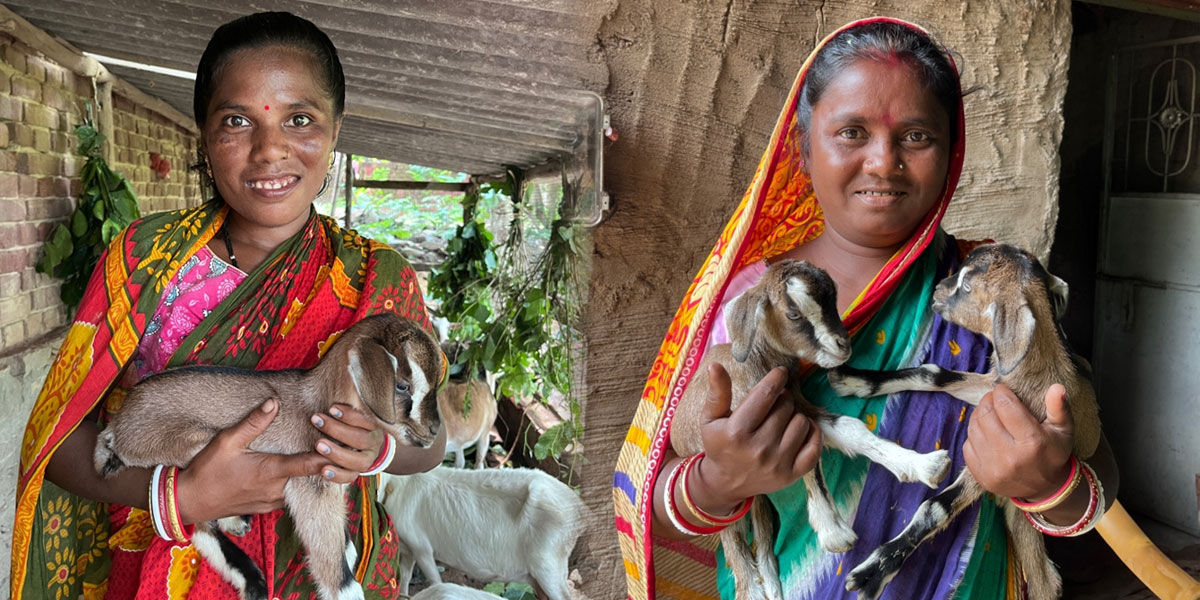
While IAM has improved livestock management, it has also encouraged rural families to diversify their livelihoods. Chanda Singh, for example, started her goat rearing journey with two goats and expanded her efforts to include poultry farming and mango orchards. With guidance from Nydhee and an initial grant, she developed a business plan that now yields significant income through the sale of chickens, goats, and farm produce.
Chanda’s integration of IAM practices with traditional farming has provided her with a diversified income stream, making her less vulnerable to economic shocks. The additional income from poultry and goats allowed her to improve her home, invest in her children’s education, and participate in SHG management, further strengthening her financial stability.
The Way Forward for Rural Communities
The success of IAM in rural communities offers a blueprint for expanding these practices across other regions. By integrating modern animal health practices with traditional knowledge, IAM can continue to improve livestock productivity, reduce mortality, and increase incomes.
To scale IAM practices, it is crucial to expand access to training programs, particularly for women, and provide ongoing support through initiatives like the Goat Gyanakendra. Centres like these serve as knowledge hubs, offering a wealth of resources on best practices, vaccinations, mineral cakes, and ethnoveterinary practices.
Moreover, creating market linkages through Farmer Producer Organisations (FPOs) can ensure that farmers receive fair prices for their livestock. By fostering community involvement and leadership, especially among women, IAM can pave the way for sustainable rural development.
Integrated Animal Management has proven to be a game-changer for rural communities, transforming livestock rearing into a sustainable and profitable venture. The stories of women like Jambi Naik, Sukumari Bindhani, and Chanda Singh highlight the immense potential of IAM to improve livelihoods, empower women, and build resilient rural economies. The way forward lies in scaling IAM practices, promoting women’s leadership, and ensuring that rural families have the tools and knowledge to thrive.